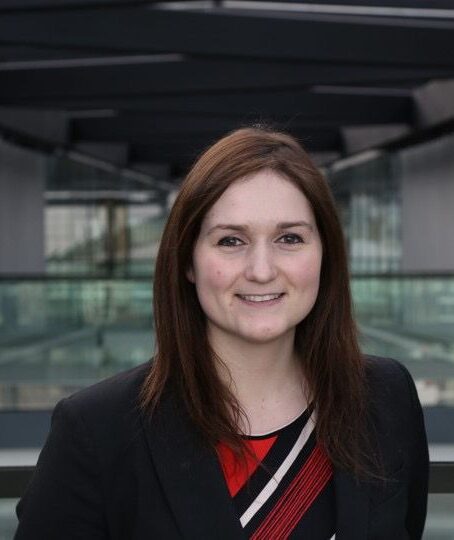

Sarah Rench, RepresentAI interviews Alexander Browder, founder of the Global Cryptocurrency Laundering Database, a new leader on cryptocurrency laundering and sanctions policy, and the youngest person ever sanctioned by Russia at age 17. This underscores his prominent role in challenging corruption, illicit finance, and hostile state activity.
The Work Behind the Headlines
Sarah: Before we talk about Russia, sanctions and the headlines, let’s start with the work itself. You’re 17 and you’ve built a global database tracking cryptocurrency laundering cases. Tell us about what you’ve built, where did the idea come from, and what have been the biggest findings so far?
Alexander: I built the Global Cryptocurrency Laundering Database, the largest-open source database of cryptocurrency money laundering, and author of a Henry Jackson Report to bring structure to an area that is often discussed in fragments. There were individual cases, law-enforcement announcements, indictments, blockchain investigations and media reports, but there was not a single open-source framework that pulled major crypto-laundering cases together and allowed patterns to be seen across time, geography and method.
The idea came from a very simple question: what happens if you follow the money across the whole ecosystem, rather than looking at each scandal in isolation? Once I began collecting cases, it became clear that this was not just about isolated hacks or scams. It was about a financial infrastructure used by criminal organisations, rogue states and professional laundering networks.
The biggest finding is the scale of this. The database currently covers cases over two decades and identifies over $350 billion in crypto-linked illicit flows. That number is conservative because it only reflects what can be documented through open sources, and the multiples could be in the trillions. The other major finding is evolution. Criminals and hostile actors adapt quickly. When one exchange or laundering route is disrupted, a new one appears. That is why I described the problem as an illicit-finance hydra.
Sarah: Your research has identified an estimated hundreds of billions of dollars in cryptocurrency linked illicit flows over the past two decades. What were some of the most surprising patterns you uncovered, and what should governments, businesses and the public understand about the scale of this issue?
Alexander: One of the most surprising patterns was how quickly crypto-linked illicit finance evolved from opportunistic criminal activity into something far more strategic. In the early years, the focus was often on darknet markets, scams, ransomware and individual laundering operations. Those still matter, but the bigger shift is that hostile states and sanctioned networks are now using digital assets as part of their financial infrastructure.
Russia is one of the clearest examples. What I am seeing with A7A5 and related networks is not simply criminals misusing cryptocurrency. It is the creation of a parallel payments ecosystem designed to move money around sanctions, preserve access to international markets and help sustain a war economy. A7A5 is particularly important because it is a ruble-backed stablecoin. In effect, Russia and its facilitators have tried to create their own stablecoin to make sanctioned cross-border payments easier and harder to disrupt.
Stablecoins solve a problem for illicit actors. Bitcoin is volatile and often less practical for large-scale settlement. Stablecoins are more useful because they can move across borders quickly while holding a more predictable value. When those rails are used by ransomware groups, terrorist financiers, procurement networks or sanctioned states, the consequences are not abstract.
The public should understand that this is not a niche crypto issue. When illicit funds move successfully, they can fund missile parts, terrorist activity and wars of aggression. They can also finance ransomware groups that attack hospitals, schools, businesses and local governments. A payment made through a laundering network can ultimately become delayed medical treatment, stolen savings, or weapons used against civilians.
Governments need to understand that enforcement has to move at the speed of the technology. It is not enough to sanction one wallet, one exchange or one company after the damage is done. These networks are constantly dynamic and when one route is shut down, another appears. That means governments needs to be constantly vigilant.
The key point is that illicit crypto is not victimless and it is not virtual in its consequences.
Sarah: You’ve gone from being a student interested in economics and technology to having your work discussed by policymakers and national security experts. How did you teach yourself to operate in a space usually dominated by governments, intelligence agencies and financial institutions?
Alexander: I think part of it is that I am young enough to have grown up around this technology. Crypto, digital payments and the wider internet culture around them are not abstract to my generation.
The issue is that most people still do not really understand this space. They may have heard of cryptocurrency, but they often do not understand how it can be used to launder money, evade sanctions, or move value outside the traditional banking system. That knowledge gap exists in the general public and, in some cases, even among senior politicians and decision-makers.
That is why I think there is a real role for younger people here. Sometimes it takes someone close enough to the technology to understand how it actually works, but serious enough to translate it into evidence that policymakers can use. My work has been about bridging that gap by taking something technical and opaque, and making it visible.
From Research Project to International News
Sarah: Your work has been covered by major outlets including Euronews, Sky News, The Times and other international publications, particularly after Russia sanctioned you over your research into cryptocurrency networks linked to sanctions evasion. When you saw your name on a Russian sanctions list, what was your immediate reaction?
Alexander: My immediate reaction was surprise, because it is unprecedented thing to see your name on a sanctions list at 17. But very quickly that surprise turned into a sense that my work had exposed something important. Russia does not sanction people because their work is irrelevant. It sanctions people when it wants to intimidate them. So while it was surreal, I also took it as confirmation that following this money trail matters. I would much rather be criticised by an authoritarian regime for exposing corruption than ignored because the research had no impact.
Sarah: You discovered you had been sanctioned while sitting in an economics class, a surreal contrast between ordinary school life and a major geopolitical event. What did that moment feel like, and what did it reveal to you about the impact an individual can have?
It was completely surreal. One moment I was in a normal school environment, sitting in an economics class, and the next I was reading that the Russian Foreign Ministry had sanctioned me. That contrast made the moment even more striking. It showed me that serious work can travel much further than you expect. You can be a student, and still produce research that reaches governments and provokes a response from a state.
It also made the issue feel very real. Sanctions evasion can sound technical and abstract, but this showed that the people and networks behind it care deeply about being exposed. That is why the work matters
Sarah: Russia accused you of spreading false information, while you’ve said the sanctions were a badge of honour. Why do you think your work attracted that level of attention?
Alexander: I think it attracted that level of attention because the work focused on A7A5, which is one of the most important tools Russia has used to get around Western sanctions. This is not just another cryptocurrency. It is a ruble-backed stablecoin connected to A7, Ilan Shor and Promsvyazbank, and it was designed to help move Russian money through alternative financial channels.
It has been sanctioned in the UK, EU, US, and elsewhere but it still continues to function. Not only does it function, it thrives. There are reports that in the first year of operation alone its processed a cumulative $100 billion in volume. I have been trying to expose the enablers which are allowing it to continue to function, specifically, enablers within Kyrgyzstan. Two months ago, 26 senior UK MPs/Lords wrote to the UK Foreign secretary urging sanctions on the enablers. Earlier this month the government responding by sanctioning some of the enablers. This is what got me sanctioned.
I think that is why Moscow reacted so strongly. The work pointed directly at a financial lifeline for Russia’s war of aggression. When an authoritarian regime accuses you of spreading false information because you exposed how its money moves, that usually means you have touched something sensitive. That is why I saw the sanctions as a badge of honour.
Age, Diversity of Thought and Leadership
Sarah: You’re often the youngest person in the rooms where these conversations are taking place. Has your age ever been an advantage, allowing you to see technology, digital culture and emerging threats in a way older generations might not? Plus, we often talk about diversity in terms of background and identity, but less often about diversity of age and diversity of thought. Why are those forms of diversity essential when tackling new challenges like cryptocurrency, artificial intelligence and global security?
Alexander: Yes, I think age and diversity of thought can be an advantage, especially in areas shaped by technology and digital culture. Younger people often grow up around the platforms, language and behaviours that older institutions are still trying to understand. Being young can also make you less constrained by institutional assumptions. If you are not already trained to think in one particular way, you may ask more basic questions that turn out to be important. Why is this exchange still operating? Why did flows move to this jurisdiction? Why are stablecoins being used instead of Bitcoin? Those questions can open up a different line of inquiry.
But age is not enough on its own. You still need rigour and humility. The advantage only matters if it is combined with serious research.
Sarah: What have older generations taught you that has improved your thinking, and equally, what do you think younger generations can bring that established institutions sometimes overlook?
Older generations have taught me the importance of discipline and caution. It is easy to identify a problem, but much harder to turn that into something useful for policymakers, law enforcement or businesses. People with experience have helped me understand that evidence has to be precise, language has to be careful, and any solution has to work in the real world.
I think one quality younger generations bring, which both established institutions and young people themselves should take more seriously, is ambition. Last week, I was invited to 10 Downing Street for a project called Project Ambition to speak about my work tackling illicit finance, and about what I have learned from entering this field at such a young age.
That experience reinforced something important for me: ambition is not just about personal success. It is about having the confidence to take on difficult problems before people expect you to. Project Ambition is about promoting that mindset across the UK, and I think that is exactly what many young people can offer.
Institutions sometimes underestimate young people because they lack traditional experience. But what we often have is urgency, and a willingness to challenge assumptions. If that ambition is properly supported, it can become a serious asset for government and society.
Looking Ahead
Sarah: What comes next for you? Are there other areas of technology, illicit finance or national security that you think deserve much greater scrutiny?
Alexander: I want to keep building on this work and make the database more useful for enforcement, policy and public understanding.
The next step is not only identifying illicit flows but helping people understand how to disrupt them more effectively. I have got several recommendations which I am pushing for to try and protect victims, including a whistleblower rewards program.
The broader question is how democratic societies can protect innovation while preventing hostile actors from exploiting openness. That balance will define a lot of technology policy in the next decade.
Sarah: What would you say to other young people who have an idea but feel they’re too young to make a meaningful contribution?
Alexander: I would say: start before you feel ready. You do not need to wait until you are older to take responsibility for the problems facing our country and the wider world. Age may affect how people initially see you, but the quality of the work determines whether they keep listening.
You should also be prepared to do the unglamorous part. I spent all of my evenings and weekends on this. You may not know everything, but you may see something others have missed. If you combine curiosity with discipline, you can contribute much earlier than people expect.
Sarah:
Thank you, Alexander. I look forward to hearing more about your Global Cryptocurrency Laundering Database and research insights on money laundering, Russia sanctions and the next steps.